



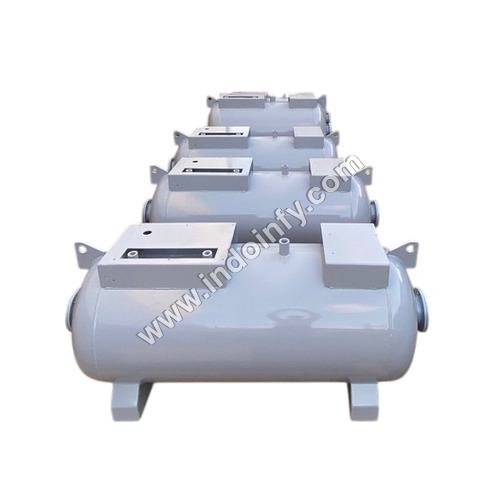
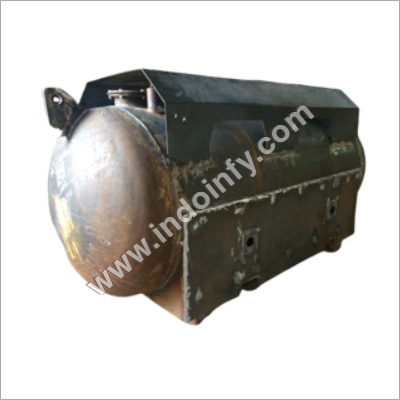
Horizontal Air Receivers
35500.0 INR/Unit
Product Details:
- Design Temperature -10C to +80C
- Working Temperature -10C to +60C
- Air Pressure Up to 16 Bar
- Height Varies as per model (typically 600-2000 mm)
- Capacity 200 Ltr, 500 Ltr, 1000 Ltr, 2000 Ltr and above
- Air Outlet 1 to 2 BSP/NPT (customized on demand)
- Air Inlet 1 to 2 BSP/NPT (customized on demand)
- Click to view more
X
Horizontal Air Receivers Price And Quantity
- 1 Unit
- 35500.0 INR/Unit
Horizontal Air Receivers Product Specifications
- 1 to 2 BSP/NPT (customized on demand)
- 200 Ltr, 500 Ltr, 1000 Ltr, 2000 Ltr and above
- 1 to 2 BSP/NPT (customized on demand)
- Industrial
- -10C to +60C
- -10C to +80C
- Standard
- Varies as per model (typically 600-2000 mm)
- Up to 16 Bar
- Air Receivers
- 10 bar
- 11 bar (duplicate entry, refer above)
- Steel
- 400 mm to 1800 mm
- 200 to 10000 liters (as per model)
- Multiple options available, exact size depends on capacity
- Epoxy or industrial grey enamel finish
- Manufactured as per IS:2825/ASME Sec VIII (Div. 1) standards
- Compressed air storage for industrial use
- Horizontal
- Internal anti-corrosive epoxy coating (optional as per model)
- Smooth powder-coated/painted finish
- Flange/Screwed as per requirement
- Included for condensate removal
- Fitted for overpressure protection
- Equipped with analogue pressure gauge
- Provided for maintenance and cleaning
- With steel support legs/base
Horizontal Air Receivers Trade Information
- Cash Advance (CA), Cash in Advance (CID), Cheque, Telegraphic Transfer (T/T), Western Union
- North India
Product Description
An air receiver, also known as a compressed air tank or air storage tank, is a type of pressure vessel designed to store compressed air for industrial, commercial, and residential applications.
Key Components:
1. Tank Body: A cylindrical or spherical vessel made of a durable material (e.g., steel, stainless steel, or aluminum) to contain the compressed air.
2. Valves and Fittings: Inlet and outlet valves, pressure gauges, and other fittings that control the flow of compressed air into and out of the tank.
3. Safety Devices: Pressure relief valves, safety valves, and other devices that prevent over-pressurization and ensure safe operation.
4. Mounting and Supports: Structural components that secure the tank in place and provide stability.
Operating Principles:
1. Compressed Air Storage: The air receiver stores compressed air generated by an air compressor or other air source.
2. Pressure Regulation: The tank helps regulate air pressure by storing excess air and releasing it as needed.
3. Air Supply: The air receiver supplies compressed air to pneumatic tools, equipment, and systems.
Applications:
1. Industrial Automation: Air receivers are used in manufacturing, processing, and packaging applications.
2. Construction and Mining: Compressed air is used to power tools, equipment, and machinery.
3. Food and Beverage Processing: Air receivers are used in food processing, packaging, and bottling applications.
4. Healthcare and Medical: Compressed air is used in medical equipment, hospitals, and healthcare facilities.
Benefits:
1. Improved Air Quality: Air receivers help regulate air pressure and flow, ensuring a consistent air supply.
2. Increased Efficiency: By storing compressed air, air receivers reduce the load on air compressors and improve overall system efficiency.
3. Reduced Energy Consumption: Air receivers help reduce energy consumption by minimizing the need for continuous air compression.
4. Enhanced Safety: Air receivers are designed with safety features that prevent over-pressurization and ensure safe operation.
PRICE RANGE: Rs. 50,000 - Rs. 5,00,000
Robust Construction & Versatile Application
Each horizontal air receiver is manufactured using premium-grade steel and is available with an optional internal anti-corrosive epoxy coating, ensuring long-lasting performance even in aggressive environments. Designed to comply with international IS:2825 and ASME Section VIII standards, these vessels are suitable for a wide range of industrial compressed air storage needs, supporting both distributor and manufacturer requirements.
Ease of Maintenance & Operational Safety
For user convenience, models are fitted with an accessible inspection manhole, making routine maintenance and cleaning straightforward. Safety remains paramount-each tank is equipped with an analogue pressure gauge and a safety valve for secure operation, while a drain valve promotes effective removal of condensate. Flange or screwed end connections are available to suit distinct installation preferences.
FAQ's of Horizontal Air Receivers:
Q: How does the internal anti-corrosive epoxy coating benefit the air receiver?
A: The internal epoxy coating, available as an optional feature, significantly enhances the tank's resistance to corrosion caused by moisture-laden compressed air, thereby increasing the life span of the receiver and reducing maintenance requirements.Q: What industrial applications are suitable for these horizontal air receivers?
A: These air receivers are ideal for industrial environments requiring compressed air storage, such as manufacturing plants, workshops, and fabrication facilities, offering volumes from 200 to 10,000 liters to match diverse operational demands.Q: When is maintenance required for the air receiver, and how is it facilitated?
A: Regular maintenance should be performed as per your facility's schedule or after heavy use. The built-in inspection manhole allows easy access for internal cleaning, inspection, and maintenance, ensuring optimal operation and safety.Q: Where can these air receivers be installed, and what mounting options are provided?
A: Designed for horizontal placement, the receivers come with robust steel support legs or bases, enabling stable installation on industrial floors, machine rooms, or fabrication facilities as needed.Q: What is the process for removing condensate from the tank?
A: The included drain valve at the receiver's base enables efficient removal of accumulated condensate, helping prevent internal moisture buildup and supporting the longevity of both the tank and connected air equipment.Q: How does compliance with IS:2825 and ASME Section VIII benefit the user?
A: Tanks manufactured as per IS:2825 and ASME Section VIII (Division 1) ensure structural integrity, safety, and reliability, meeting the rigorous standards required for industrial compressed air systems in India and internationally.Tell us about your requirement

Price:
Quantity
Select Unit
- 50
- 100
- 200
- 250
- 500
- 1000+
Additional detail
Mobile number
Email

Other Products in 'Air Receivers & Vacuum Tanks' category

Contact Details

- 13/1, Bajri Industrial Area, Badkhal Pali Road, Near Bharat Petrol Pump,Faridabad - 121001, Haryana, India
- Phone : 08045477166
GST : 06ABTPA0018N1ZP

- Mr Nishant Ahuja (Founder & CEO)
- Mobile : 08045477166
-
 Send Inquiry
 Send Inquiry
Visit Us


INDOINFY STEELCORP
All Rights Reserved.(Terms of Use)
Developed and Managed by Infocom Network Private Limited.
Developed and Managed by Infocom Network Private Limited.

