



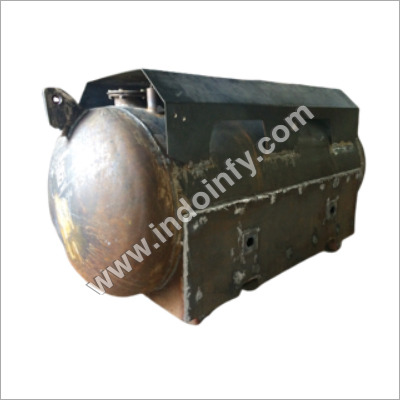
Air Receiver Tank
Product Details:
- Capacity 1000-10000 Liter/day
- Color Silver
- Air Pressure 0-10 , 10-20 Bar
- Tank Material Steel
- Usage Industrial
- Product Type Air Receiver Tank
- Click to view more
Air Receiver Tank Price And Quantity
- 1 Unit
- 45500.0 INR/Unit
- 50000.00 - 500000.00 INR/Unit
Air Receiver Tank Product Specifications
- 0-10 , 10-20 Bar
- Steel
- Silver
- 1000-10000 Liter/day
- Air Receiver Tank
- Industrial
Air Receiver Tank Trade Information
- 10 Unit Per Week
- Week
- North India
Product Description
An air receiver tank, also known as an air compressor tank or air storage tank, is a pressure vessel used in compressed air systems. Its primary function is to store compressed air produced by an air compressor. Here are some of the main roles and benefits of an air receiver tank:
1. Air Storage
The tank stores air under pressure, which helps to maintain a constant supply of air to the system, even when the compressor is not actively running. This can help to smooth out fluctuations in demand and prevent the compressor from cycling on and off frequently.
2. Pressure Stabilization
It helps in maintaining stable pressure within the system, absorbing pressure surges and preventing damaging pressure spikes.
3. Condensation Control
As air is compressed, it typically cools and causes moisture to condense. The air receiver tank provides a space for the moisture to settle before the air reaches the tools or equipment, reducing the chances of water damage.
4. Improved Efficiency
By allowing the compressor to run more efficiently, it minimizes wear and tear on the compressor. This reduces energy consumption and extends the lifespan of the compressor.
5. Flow Regulation
It helps to ensure a consistent flow of compressed air, improving system performance and preventing interruptions or inefficiencies in air delivery.
Key Components of an Air Receiver Tank:
- Inlet valve: Allows compressed air to enter the tank.
- Outlet valve: Lets the compressed air flow from the tank to the system.
- Pressure relief valve: Ensures safety by releasing air if the pressure inside the tank exceeds the safe limit.
- Drain valve: Used to remove condensed moisture that collects at the bottom of the tank.
- Pressure gauge: Monitors the internal pressure of the tank.
- Manual drain or automatic drain system: Removes moisture that builds up inside the tank due to the compression process.
Sizing an Air Receiver Tank:
The size of the air receiver tank is generally based on the compressor's capacity and the specific needs of the air system. It is essential to choose the right tank size to balance cost, energy efficiency, and performance.
PRICE RANGE: Rs. 50,000 - Rs. 5,00,000
Robust Steel Construction for Longevity
Each air receiver tank is constructed from premium-grade steel, offering exceptional strength and resistance to wear. The silver and grey finishing enhances corrosion resistance, making these tanks ideal for demanding industrial environments. Careful attention to fabrication ensures long service life and minimal maintenance requirements, supporting consistent operations for air supply systems.
Versatile Capacity and Pressure Range
Our tanks are available in a diverse range of sizes, with daily capacities from 1,000 up to 10,000 liters, and can safely operate at pressures between 0-10 and 10-20 bar. This flexibility allows seamless integration with most air compressor setups, optimizing performance for various industrial uses while maintaining safety and efficiency.
Complete Support Across India
As leading manufacturers, fabricators, distributors, suppliers, and wholesalers, we provide end-to-end support for industrial clients across India. From expert advice on selection to installation and after-sales service, our team is dedicated to delivering reliable solutions and technical assistance tailored to the specific needs of your facility.
FAQ's of Air Receiver Tank:
Q: How are air receiver tanks utilized in industrial settings?
A: Air receiver tanks are integral to industrial compressed air systems, acting as reservoirs to balance demand and supply. They store compressed air, reduce pulsations from compressors, provide a steady airflow, and help in moisture separation, enhancing overall system efficiency and longevity.Q: What is the process of installing a steel air receiver tank?
A: Installation involves site assessment, placement of the tank on a stable foundation, securing it with appropriate fixtures, and connecting it to the air compressor system via suitable pipelines. It is essential to follow safety protocols and consult manufacturer guidelines for the best results.Q: When should an air receiver tank be serviced or inspected?
A: Routine inspections should be conducted every 6 to 12 months, focusing on checking internal and external surfaces for corrosion, verifying pressure relief valves, and ensuring there are no leaks or wear. Timely servicing maintains optimal performance and operational safety.Q: Where can your air receiver tanks be supplied and installed in India?
A: We supply and install our steel air receiver tanks across India, catering to various industries such as manufacturing, automotive, pharmaceuticals, and more. Our distribution network ensures prompt delivery and support to urban and industrial regions nationwide.Q: What are the benefits of using a steel air receiver tank?
A: Key benefits include enhanced stability of air supply, improved compressor performance, reduced wear on system components, and efficient removal of moisture and contaminants. Steel construction ensures durability and long service life, particularly in demanding industrial environments.Q: Can the air receiver tanks handle variable air pressures up to 20 bar?
A: Yes, our air receiver tanks are engineered to safely operate within both 0-10 and 10-20 bar pressure ranges. This makes them suitable for high-pressure applications across various industrial processes.
Price:
- 50
- 100
- 200
- 250
- 500
- 1000+

Other Products in 'Air Receivers & Vacuum Tanks' category


- 13/1, Bajri Industrial Area, Badkhal Pali Road, Near Bharat Petrol Pump,Faridabad - 121001, Haryana, India
- Phone : 08045477166
GST : 06ABTPA0018N1ZP

- Mr Nishant Ahuja (Founder & CEO)
- Mobile : 08045477166
-
 Send Inquiry
 Send Inquiry

Developed and Managed by Infocom Network Private Limited.

