



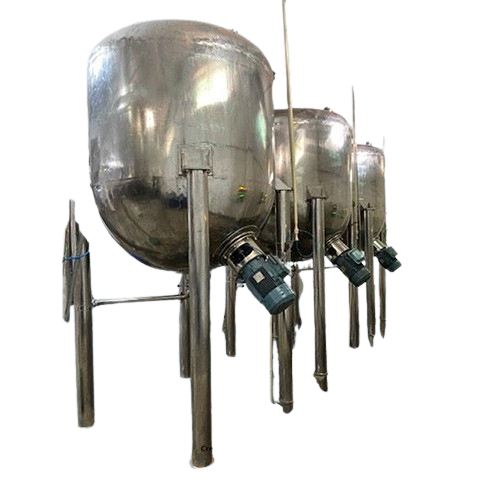
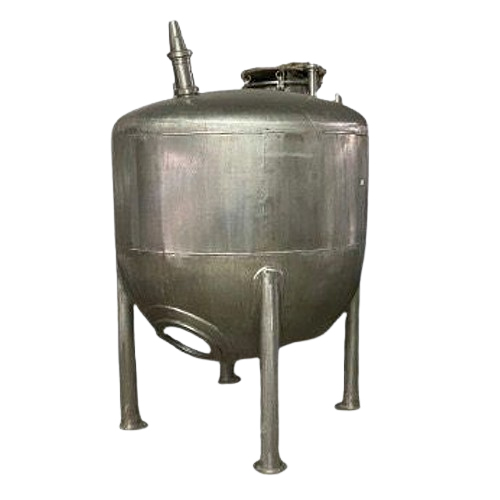
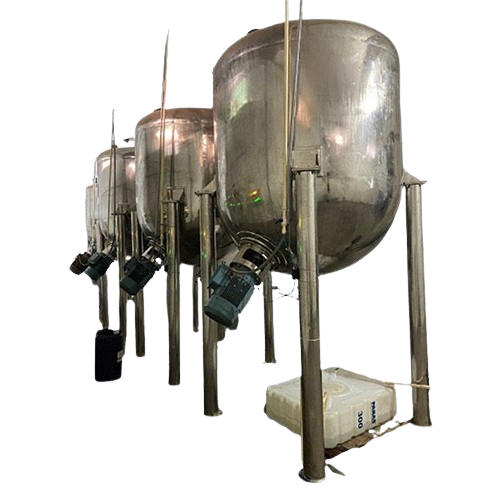
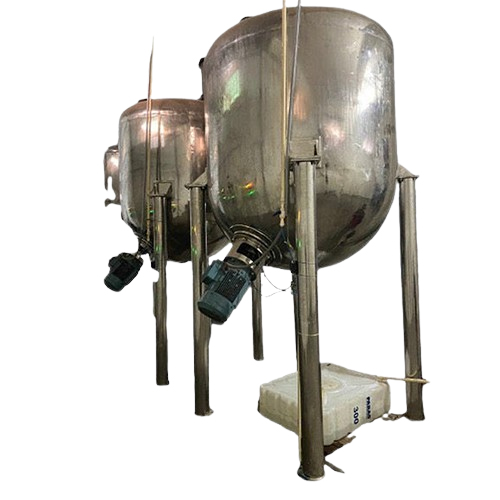
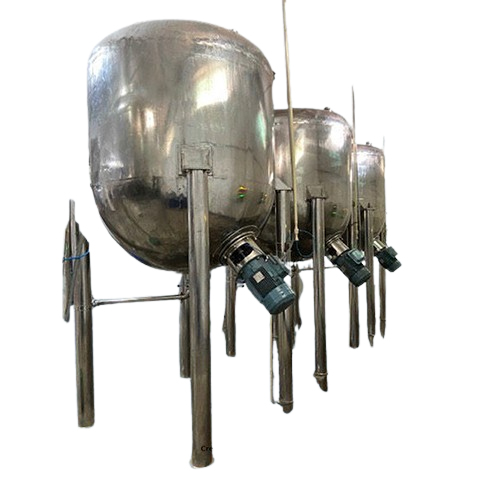
Agitated Reactors
445500.0 INR/Unit
Product Details:
- Application Industrial
- Material Mild Steel
- Size All size Available
- Product Type Horizontal Pressure Vessels
- Condition New
- Color Grey
- Click to view more
X
Agitated Reactors Price And Quantity
- 445500.0 INR/Unit
- 1 Unit
Agitated Reactors Product Specifications
- New
- Mild Steel
- Industrial
- Grey
- Horizontal Pressure Vessels
- All size Available
Agitated Reactors Trade Information
- Cash Advance (CA), Cash in Advance (CID), Cheque, Western Union, Letter of Credit (L/C)
- 50 Unit Per Week
- 1 Week
- North India
Product Description
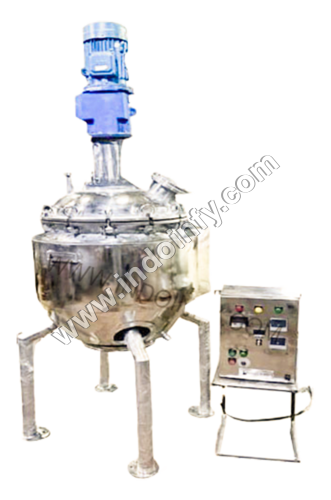
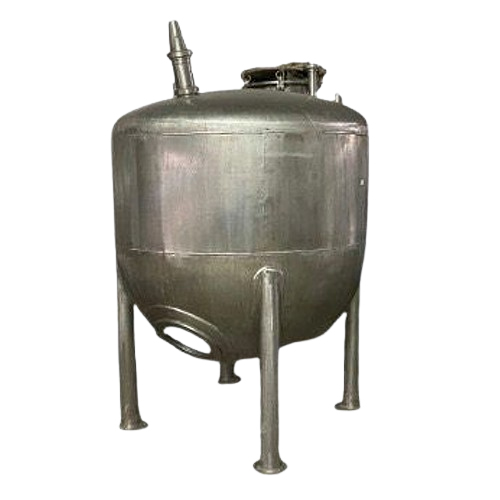
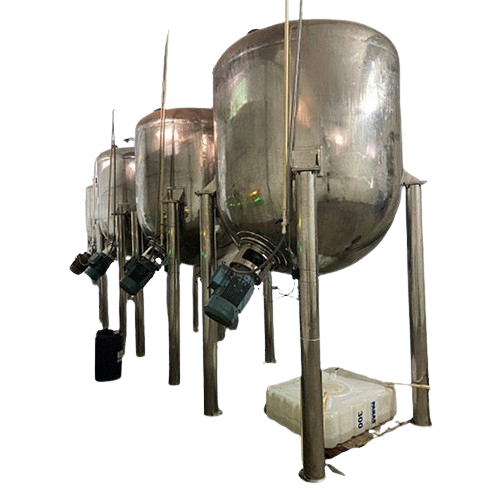
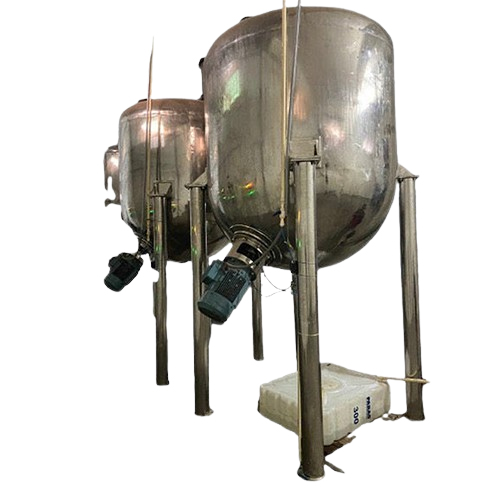
An agitated reactor is a vessel equipped with a mechanical agitator designed to mix its contents thoroughly. This agitation ensures uniform temperature distribution, enhances mass transfer, and promotes effective chemical reactions. Agitated reactors are widely used in chemical, pharmaceutical, and food processing industries for various applications, including polymerization, fermentation, and mixing of viscous materials.
Key Components:
- Reactor Vessel: The main container where the reaction occurs, typically made from materials like stainless steel or glass-lined steel to resist corrosion.
- Agitator: A mechanical device, such as a stirrer or impeller, that moves the contents to ensure uniform mixing.
- Jacket: An outer layer surrounding the vessel, allowing for the circulation of heating or cooling fluids to maintain the desired reaction temperature.
- Baffles: Structures inside the vessel that prevent vortex formation and promote better mixing.
Types of Agitated Reactors:
- Batch Reactors: Operate in a closed system where all reactants are added at the start, and the product is removed at the end.
- Continuous Reactors: Allow for the continuous input of reactants and removal of products, suitable for large-scale operations.
- Semi-Batch Reactors: Combine elements of both batch and continuous reactors, where some reactants are added continuously while others are added in batches.
Applications:
- Chemical Processing: Synthesis of chemicals, polymers, and specialty products.
- Pharmaceuticals: Production of active pharmaceutical ingredients (APIs) and formulations.
- Food and Beverages: Fermentation processes, emulsification, and mixing of ingredients.
Considerations:
- Material Compatibility: Choosing materials that resist corrosion and are compatible with the chemicals involved.
- Heat Transfer Efficiency: Designing the jacket and agitator to ensure effective heat management.
- Scale-Up: Ensuring that laboratory-scale results can be replicated in larger, industrial-scale reactors.
In summary, agitated reactors are essential for processes requiring controlled mixing and temperature regulation. Their design and operation are critical to achieving desired reaction outcomes and product quality.
Versatile Material Choices
We fabricate agitated reactors using mild steel and stainless steel, ensuring compatibility with a variety of industrial chemicals and processes. This versatility enables businesses to select reactors tailored to their operational needs for durability and efficiency.
Wide Range of Sizes Available
Our reactors are offered in all sizes, catering to both small- and large-scale industrial applications. This ensures that regardless of the volume or space constraints, clients can find the right fit for their production processes.
Reliable Operation Without Automation
Designed without PLC or computerized controls, these reactors emphasize robust manual operation. This approach minimizes maintenance complexity and facilitates easy integration into existing workflows, especially in environments where automated systems are unnecessary or unavailable.
FAQs of Agitated Reactors:
Q: How are the agitated reactors operated without PLC or computerized control?
A: Our agitated reactors are manually operated, making them suitable for settings where simple, hands-on control is preferred. Operators can manage mixing and agitation functions directly, providing greater process oversight without relying on automated systems.Q: What industries typically use these mild steel or stainless steel agitated reactors?
A: These reactors are commonly used in chemical, pharmaceutical, food processing, and other industrial sectors that require thorough mixing or blending of liquids and semi-solids under controlled conditions.Q: When should a company choose mild steel versus stainless steel for their reactor material?
A: Mild steel reactors are ideal for non-corrosive materials and cost-sensitive applications, while stainless steel reactors provide higher resistance to corrosion, making them suitable for processes involving reactive or acidic substances.Q: Where are these reactors fabricated and supplied?
A: Our reactors are fabricated and supplied across India. As a manufacturer, distributor, supplier, and wholesaler, we cater to clients nationwide, ensuring prompt delivery and technical support.Q: What is the standard voltage requirement for these reactors?
A: All our agitated reactors are designed to operate within the standard 220-240 volt range, aligning with typical industrial power supplies found across Indian manufacturing facilities.Q: How does the size variety benefit industrial customers?
A: With all sizes available, customers can select reactors that precisely match their processing volumes and space limitations, optimizing production efficiency and facility layout.Q: What is the primary process advantage of using these agitated reactors?
A: The main advantage is efficient and consistent mixing, which enhances product quality and homogeneity. The robust design ensures reliability and ease of maintenance, lowering downtime in industrial workflows.Tell us about your requirement

Price:
Quantity
Select Unit
- 50
- 100
- 200
- 250
- 500
- 1000+
Additional detail
Mobile number
Email

Other Products in 'Jacketed & Insulated Vessels ' category

Contact Details

- 13/1, Bajri Industrial Area, Badkhal Pali Road, Near Bharat Petrol Pump,Faridabad - 121001, Haryana, India
- Phone : 08045477166
GST : 06ABTPA0018N1ZP

- Mr Nishant Ahuja (Founder & CEO)
- Mobile : 08045477166
-
 Send Inquiry
 Send Inquiry
Visit Us


INDOINFY STEELCORP
All Rights Reserved.(Terms of Use)
Developed and Managed by Infocom Network Private Limited.
Developed and Managed by Infocom Network Private Limited.

