



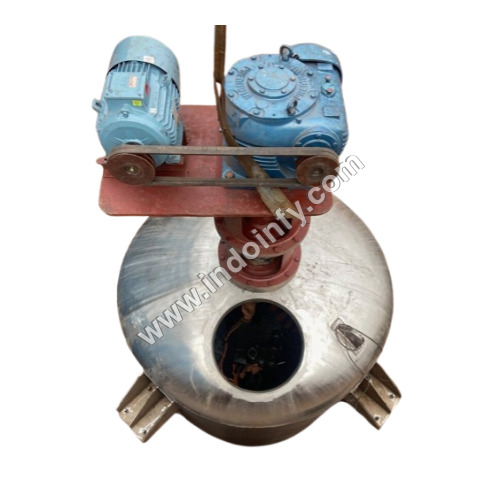
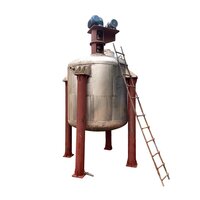
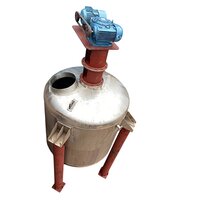
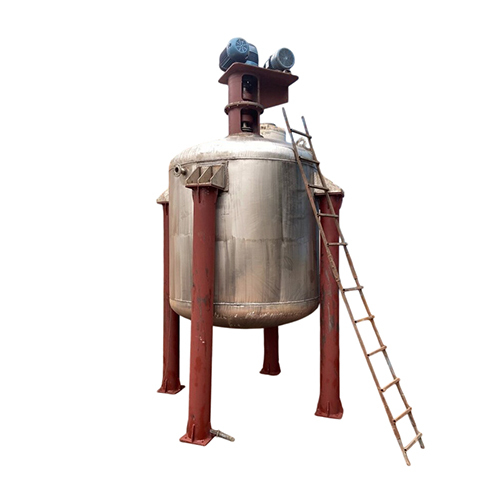
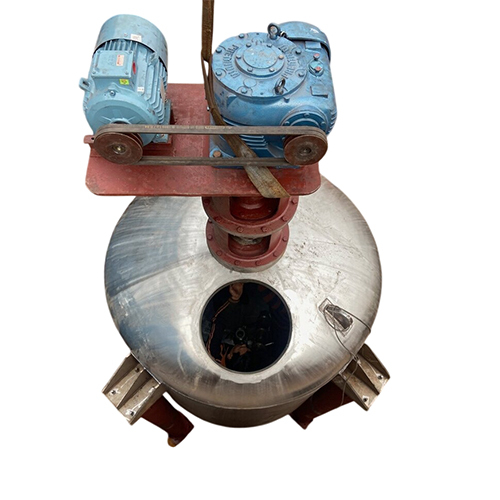
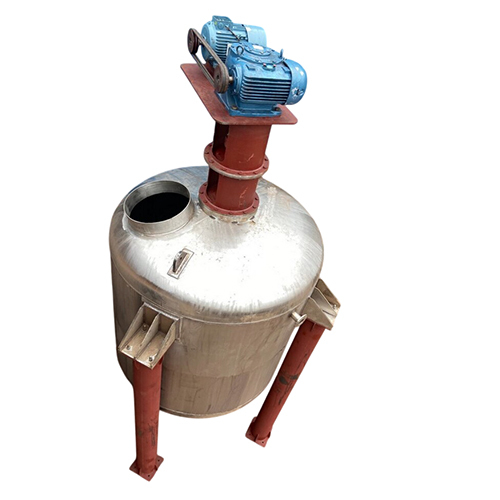
Chemical Reactors
369.0 INR/Unit
Product Details:
- General Use Industrial
- Material Stainless Steel
- Type Chemical Reactor
- Computerized No
- Automatic Yes
- PLC Control Yes
- Drive Type Electric
- Click to view more
X
Chemical Reactors Price And Quantity
- 369.0 INR/Unit
- 1 Unit
Chemical Reactors Product Specifications
- Electric
- Yes
- Chemical Reactor
- No
- Yes
- Stainless Steel
- High Speed, Automatic Alarming
- Industrial
Chemical Reactors Trade Information
- North India
Product Description
A chemical reactor is a vessel or system used to carry out chemical reactions, typically in a controlled environment, to produce desired chemical products. Chemical reactors are essential in industries such as pharmaceuticals, petrochemicals, food and beverages, and environmental management. The design of a chemical reactor is influenced by factors like reaction kinetics, temperature, pressure, mixing efficiency, and the nature of the chemicals involved.Types of Chemical Reactors:
There are several types of chemical reactors, each designed for specific reaction conditions:
Batch Reactors:
Function: In a batch reactor, all reactants are loaded into the reactor at the beginning of the process. The reaction occurs over a period of time, and the products are removed once the reaction is complete.
Characteristics: Batch reactors are flexible and used for small-scale production, custom formulations, or research purposes. The reaction time is controlled, and conditions can be adjusted during the process.
Applications: Pharmaceutical manufacturing, specialty chemicals, and food processing.
Continuous Reactors:
Function: In continuous reactors, reactants are fed continuously into the reactor while the products are removed continuously. This process operates over long periods of time.
Characteristics: Continuous reactors are designed for large-scale production, providing more consistent output. They offer higher throughput compared to batch reactors.
Applications: Large-scale chemical manufacturing, petrochemical industries, and power generation.
Semi-Batch Reactors:
Function: A semi-batch reactor is a combination of both batch and continuous reactors. Reactants are added continuously or incrementally during the reaction, while products may be removed intermittently.
Characteristics: Offers more control over reaction rates and is used when it's necessary to control the reaction or introduce reactants in stages.
Applications: Fine chemicals, polymers, and certain bioengineering processes.
Plug Flow Reactors (PFR):
Function: In a PFR, the reactants move through the reactor as a "plug" or "slug," with minimal mixing in the direction of flow, allowing for a uniform flow of reactants.
Characteristics: Often used for gas-phase reactions or when a steady, continuous flow is required. It's designed to provide high conversion rates for reactions with fast kinetics.
Applications: Petrochemical industries, refineries, and large-scale production of chemicals.
Stirred Tank Reactors (STR):
Function: A stirred tank reactor is a type of vessel with mechanical agitation or stirring to ensure that the reactants are well mixed throughout the reaction process.
Characteristics: STRs provide excellent control over temperature, pressure, and mixing, and are flexible for handling different types of reactions.
Applications: Widely used in the pharmaceutical, food and beverage, and chemical industries for both batch and continuous processes.
Key Factors in Chemical Reactor Design:
Reaction Kinetics: The rate at which reactants are converted to products, often influenced by temperature, pressure, and concentration. Reactors are designed to optimize these factors to achieve the desired rate of reaction.
Temperature and Pressure Control: Many reactions require precise control of temperature and pressure to ensure optimal reaction rates and product yield. Reactors are equipped with heating and cooling systems, and some may be designed to withstand high pressures (e.g., for gas-phase reactions).
Mixing: Proper mixing is critical for ensuring uniform reaction conditions. The degree of mixing depends on reactor type, with some reactors having mechanical stirrers, while others use fluid flow patterns like in PFRs.
Residence Time: The time the reactants spend in the reactor affects the extent of the reaction. A longer residence time may be needed for slower reactions, while fast reactions may require short residence times.
Catalysis: Many reactions in chemical reactors are catalyzed (using a substance to speed up the reaction). Catalysts can be either heterogeneous (solid) or homogeneous (liquid or gas), and the design of the reactor will vary depending on the type of catalyst used.
Heat Transfer: Many reactions either absorb or release heat. Effective heat management ensures the reaction occurs at the desired temperature and prevents temperature fluctuations that could affect product quality.
Common Applications of Chemical Reactors:
Petrochemical Industry: To produce fuels, plastics, and other byproducts from crude oil.
Pharmaceuticals: In the synthesis of drugs, biologics, and specialty chemicals.
Food Processing: For fermentation, cooking, or other processes that require controlled chemical reactions.
Environmental Applications: Wastewater treatment and air purification processes, where chemical reactors help neutralize pollutants or manage waste.
Reactor Selection Criteria:
The choice of reactor depends on several factors, including:
The reaction type (exothermic or endothermic)
The required reaction time
The desired product yield
Scale of production (lab-scale, pilot plant, or full-scale production)
Cost-effectiveness and safety considerations
In summary, chemical reactors are designed to facilitate controlled reactions in a safe and efficient manner. The reactor type and design chosen depend on the reaction's nature, desired product, and operational requirements.
Is there a specific type of chemical reactor or an application you're curious about? I'd be happy to dive deeper into it!
PRICE RANGE: Rs. 5,00,000 - Rs. 50,00,000
Advanced Safety and Efficiency
Our stainless steel chemical reactors are engineered for superior efficiency and safety. The automatic alarming feature provides instant notifications of any anomalies, reducing downtime and preventing potential hazards. High-speed electric drives and PLC-controlled automation facilitate seamless operation, enabling consistent results for industrial processes.
Ideal for Indian Industries
These reactors are widely used across diverse sectors in India, such as pharmaceuticals, specialty chemicals, and manufacturing plants. The robust construction and reliable automatic functions make them particularly appropriate for intensive, large-scale applications, supporting India's dynamic industrial growth.
FAQ's of Chemical Reactors:
Q: How is the chemical reactor operated without a computerized interface?
A: The reactor uses PLC (Programmable Logic Controller) control to perform automated tasks. While it does not have a full computerized interface, operators can easily manage settings and monitor critical parameters through a PLC-based panel for streamlined and reliable operation.Q: What materials are used in constructing these chemical reactors?
A: Our chemical reactors are manufactured from high-grade stainless steel. This material is chosen for its excellent resistance to corrosion, ensuring durability and safe processing of various industrial chemicals.Q: When should the automatic alarming feature be used during operation?
A: The automatic alarming feature is always active during operation. It monitors key parameters continuously and automatically notifies operators of abnormal conditions, such as temperature or pressure deviations, helping ensure timely intervention and safety.Q: Where are these high-speed reactors typically installed?
A: These reactors are most often installed in industrial facilities across India, including chemical manufacturing plants, pharmaceutical factories, and specialty processing units where robust, safe, and efficient chemical processing is essential.Q: What is the process for running and overseeing a batch in this reactor?
A: Operators input necessary parameters via the PLC control panel, initiate the process, and then let the reactor's automated system handle speed, monitoring, and alarms. Regular visual checks and periodic inspection assure optimal performance throughout each batch cycle.Q: How does the high-speed feature benefit industrial production?
A: The high-speed electric drive boosts processing efficiency, shortens reaction times, and increases overall output. This results in cost savings, improved productivity, and the ability to process larger quantities with greater consistency in an industrial setting.Tell us about your requirement

Price:
Quantity
Select Unit
- 50
- 100
- 200
- 250
- 500
- 1000+
Additional detail
Mobile number
Email

Other Products in 'Agitators, Mixers & Reactors' category

Contact Details

- 13/1, Bajri Industrial Area, Badkhal Pali Road, Near Bharat Petrol Pump,Faridabad - 121001, Haryana, India
- Phone : 08045477166
GST : 06ABTPA0018N1ZP

- Mr Nishant Ahuja (Founder & CEO)
- Mobile : 08045477166
-
 Send Inquiry
 Send Inquiry
Visit Us


INDOINFY STEELCORP
All Rights Reserved.(Terms of Use)
Developed and Managed by Infocom Network Private Limited.
Developed and Managed by Infocom Network Private Limited.

